Roll Off Dumpsters Services Colorado Springs Iron Mountain
Iron Mountain Demolition Colorado Springs Trucking

Materials That Require Special Disposal

Certain materials cannot go into a standard roll-off dumpster because they pose environmental, health, or disposal concerns. Hazardous materials include paints, solvents, pesticides, motor oil, and other chemicals. Regulated materials include tires, batteries, fluorescent bulbs, and appliances containing refrigerants. Special-handling materials, such as asbestos-containing debris, require specific procedures and approved disposal methods.

These restrictions help ensure debris reaches facilities equipped to handle it safely. The Colorado Springs Landfill accepts construction and demolition waste but excludes hazardous materials. Similarly, the Fountain Landfill handles municipal solid waste and construction debris while directing chemical waste to appropriate disposal facilities. Households in El Paso and Teller counties can use local hazardous waste collection services for qualifying items, including paint, chemicals, batteries, oils, and fluorescent bulbs. The El Paso County Household Hazardous Waste Facility provides free disposal services for eligible households, with proof of residency required.
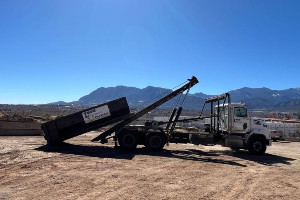
Roll-Off Dumpster Rules: What’s Allowed in Colorado Springs?

Most roll-off dumpsters accept construction debris, wood, drywall, roofing materials, concrete, brick, dirt, and general waste. However, hazardous materials such as paint, solvents, tires, batteries, fluorescent bulbs, and motor oil are prohibited. Heavy materials like concrete and dirt also have weight and fill restrictions, so choosing the right dumpster requires considering more than its capacity.

What Materials Can Go in a Roll-Off Dumpster?

Roll-off dumpsters offer a convenient way to manage waste from construction, demolition, renovations, and property cleanups. However, not every material can be disposed of the same way. At Iron Mountain Demolition, we help customers throughout Colorado Springs understand their disposal options before filling a container. Most roll-off dumpsters accept common construction and demolition debris, including wood, drywall, roofing shingles, scrap metal, and mixed construction materials. General household junk, such as furniture and other nonhazardous waste, is also typically permitted. These materials can often be combined in a single container, making cleanup easier for projects involving multiple types of debris.

Heavier materials, including clean concrete, asphalt, brick, concrete blocks, dirt, and rock, are generally accepted with additional restrictions. Because these materials can quickly exceed a dumpster’s weight capacity, they may require smaller containers or dedicated loads. Asphalt and clean concrete may also need to be separated from other debris to meet disposal or recycling requirements. Before loading your dumpster, it’s important to confirm which materials are permitted and whether any special weight or separation requirements apply. Iron Mountain Demolition can help you select a suitable container based on the type and quantity of debris your project will generate.

Roll Off Dumpsters Iron Mountain Colorado Springs Demo

Step 3 — Planning & Scheduling

After your site assessment, we develop a customized work plan tailored to your timeline and project type. During this stage, our team handles permit coordination (when applicable), schedules the crew, and secures the necessary equipment and roll-off dumpsters. You’ll receive a full project timeline along with your expected start date, so you always know what comes next. Effective demolition planning and project scheduling keep everything moving smoothly and predictably.

Step 4 — Demolition or Excavation Work

When the work begins, our crew mobilizes promptly with all equipment ready to go. Iron Mountain performs structural demolition, excavation services, and dirt work using safe, controlled methods that meet local regulations and industry best practices. Throughout the project, we maintain real-time communication, keeping you updated on progress and any discoveries on-site. We also sort and separate materials when possible, allowing for efficient hauling and environmentally responsible disposal.

AHERA Certified Equipment Operators

Understanding Dumpster Weight Limits and Mixed Loads

Dumpster capacity is measured in cubic yards, but volume and weight are different considerations. A 10-yard dumpster filled with concrete weighs significantly more than the same container filled with drywall. Dense materials can reach weight limits long before the dumpster appears full.

Separating materials also matters. Clean concrete, asphalt, and dirt may qualify for different disposal or recycling processes than mixed construction debris. Keeping these materials separate can simplify handling and potentially reduce disposal costs. Visit our construction debris recycling page to learn more.

Dumpster Placement and Permits

Placing a dumpster on private property generally differs from placing one on a public street or within a public right-of-way. Additional authorization may be necessary depending on the location. Review our dumpster placement and permits guide before scheduling delivery.

Frequently Asked Questions About Dumpster Disposal

Can I Put Roofing Shingles in a Dumpster?

Yes. Asphalt shingles are generally accepted as construction debris, although their weight may require a smaller container or specific loading restrictions.

Can I Mix Concrete and Regular Trash?

Sometimes, but mixing concrete with household trash can complicate disposal and increase costs. A dedicated container is generally preferable for substantial quantities of concrete.

What Happens if a Prohibited Item Is Found?

The load may be rejected, require sorting, or incur additional handling and disposal charges. Always confirm material restrictions before loading.

Can I Put a Refrigerator in a Dumpster?

Not without prior approval. Refrigerators contain refrigerants that require proper recovery and handling. Ask about approved appliance recycling options instead.

How Full Can I Fill a Dumpster?

Keep debris below the container’s top edge and within its permitted weight limit. Overfilled dumpsters can create transportation hazards and may require unloading before pickup.

For help choosing the appropriate roll-off dumpster for your project, contact Iron Mountain Demolition in Colorado Springs. Our team can help you evaluate debris types, container sizes, and disposal requirements before your project begins.

Demolition Services Colorado Springs Iron Mountain