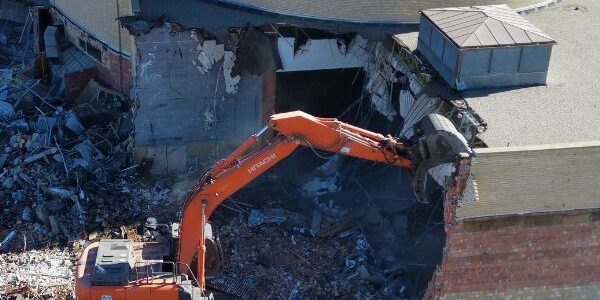
Vacant big-box and anchor spaces are becoming a familiar sight across Colorado Springs. As national retailers shrink their footprints or close, they leave behind tens of thousands of square feet of prime real estate. For property owners, that empty shell isn’t a liability—it’s an opportunity. With the right demolition strategy, a dead store can become a thriving multi-tenant center, a medical hub, or an entertainment destination. Iron Mountain helps you get there.
Interior Gut vs. Full Demolition
The first big decision is how much comes down. An interior gut strips the space to its structural shell while keeping the exterior walls, roof, and steel frame intact. This works well when the shell is sound and you’re reworking the layout inside. A full demolition makes sense when the structure is compromised, when code changes since the original build make renovation impractical, or when a ground-up design serves your vision better.
Cost usually drives the call. Reusing an existing frame saves significant money, but only if the bones are solid. Our Demolition Cost Guide breaks down the numbers so you can weigh both paths clearly.
Common Repositioning Paths
Most big-box conversions follow a few proven routes, and each calls for different demo work.
Multi-tenant subdivision splits one large box into several smaller bays. This means demising walls, new entrances, and often separate utility runs—work that ties closely to our Tenant Improvement Projects.
Medical and fitness conversions require heavy interior gutting to make room for specialized MEP systems, reinforced floors, and updated HVAC.
Entertainment uses, like theaters or indoor sports, may need structural modifications to open up sightlines or support new loads. Whatever the path, our Building Removal Services team scopes the demo to match your end use.
Permitting and Change-of-Use Considerations
Repositioning almost always triggers a change in occupancy classification, and that changes the rules. A retail-to-medical conversion, for example, brings stricter fire, accessibility, and mechanical requirements. These shifts affect what demolition must accomplish to bring the building into compliance. Our Permit and Regulations page walks through how occupancy changes reshape your project scope.
Environmental Concerns in Older Buildings
Many big-box stores in Colorado Springs date to the 1980s and 1990s—an era when asbestos and other hazardous materials were common in flooring, insulation, and roofing. Before any demolition begins, these materials must be identified and handled correctly. Our Asbestos and Hazardous Materials blog post explains the inspection and abatement process. We also route salvageable steel, concrete, and other debris through Construction Waste Recycling to keep costs and landfill impact down.
Timeline Expectations
Adaptive reuse retail demolition typically moves faster than ground-up construction. You’re working with an existing foundation, frame, and utility connections, which trims weeks or months off the schedule. Anchor store renovation demolition still needs careful planning, but reusing the shell gets tenants in the door sooner.
Ready to Reposition Your Property?
If you own a vacant or underperforming big-box space, let’s talk. Iron Mountain will assess your building, map out the smartest demolition approach, and help you unlock its full potential. Reach out today for a consultation.